Global View
.jpg)

Science Act is a signatory of the San Francisco Declaration on Research Assessment (DORA). We recognize that small numbers of highly cited articles can disproportionately influence citation‑based indicators such as the 2‑year Journal Impact Factor (JIF). Because of this, Science Act believes that journal‑level citation metrics are not, on their own, reliable measures of research quality.
We encourage authors, reviewers, and readers to consider a broad range of indicators when evaluating research and journals. Article‑level metrics — including downloads, citations, and online attention — are available on each article page and provide a more nuanced view of the impact and reach of individual papers.
Science Act is committed to Responsible Research Assessment (RRA) and supports evaluating research on its own merits, rather than relying on journal‑based metrics or proxy measures of quality.
Article metrics such as number of downloads, citations and online attention are available from each article page, and provide an overview of the attention received by a paper.
The metric definitions below are shared by all Science Act journals.
The Journal Impact Factor is defined as all citations to the journal in the current JCR year to items published in the previous two years, divided by the total number of scholarly items (these comprise articles, reviews, and proceedings papers) published in the journal in the previous two years. Though not a strict mathematical average, the Journal Impact Factor provides a functional approximation of the mean citation rate per citable item. A Journal Impact Factor of 1.0 means that, on average, the articles published one or two years ago have been cited one time. A Journal Impact Factor of 2.5 means that, on average, the articles published one or two years ago have been cited two and a half times. The citing works may be articles published in the same journal. However, most citing works are from different journals, proceedings, or books indexed in Web of Science Core Collection. (Source: Clarivate Analytics)
This measures the median time in days from when the journal receives a manuscript submission to when the submission is either sent out for peer review or rejected.
This measures the median time in days from when the journal receives a manuscript submission to when the submission is accepted. This includes all peer review and can also include time in revision.
All accepted articles are eligible for full publication funding under the Science Act Flagship Journal Program. Funding support is guaranteed for manuscripts published before 2027, ensuring that authors face no article processing charges and can benefit from broad dissemination of their work. This initiative reflects our commitment to supporting high-quality scientific research and fostering global accessibility to new knowledge. For more information please check Funding programs.
Cookies are used by this site.
“Authors retain copyright of their work and grant Journal Science Act a non-exclusive license to publish the article under the CC BY 4.0 agreement.”
Attribution 4.0 International (CC BY 4.0) Deed: https://creativecommons.org/licenses/by/4.0
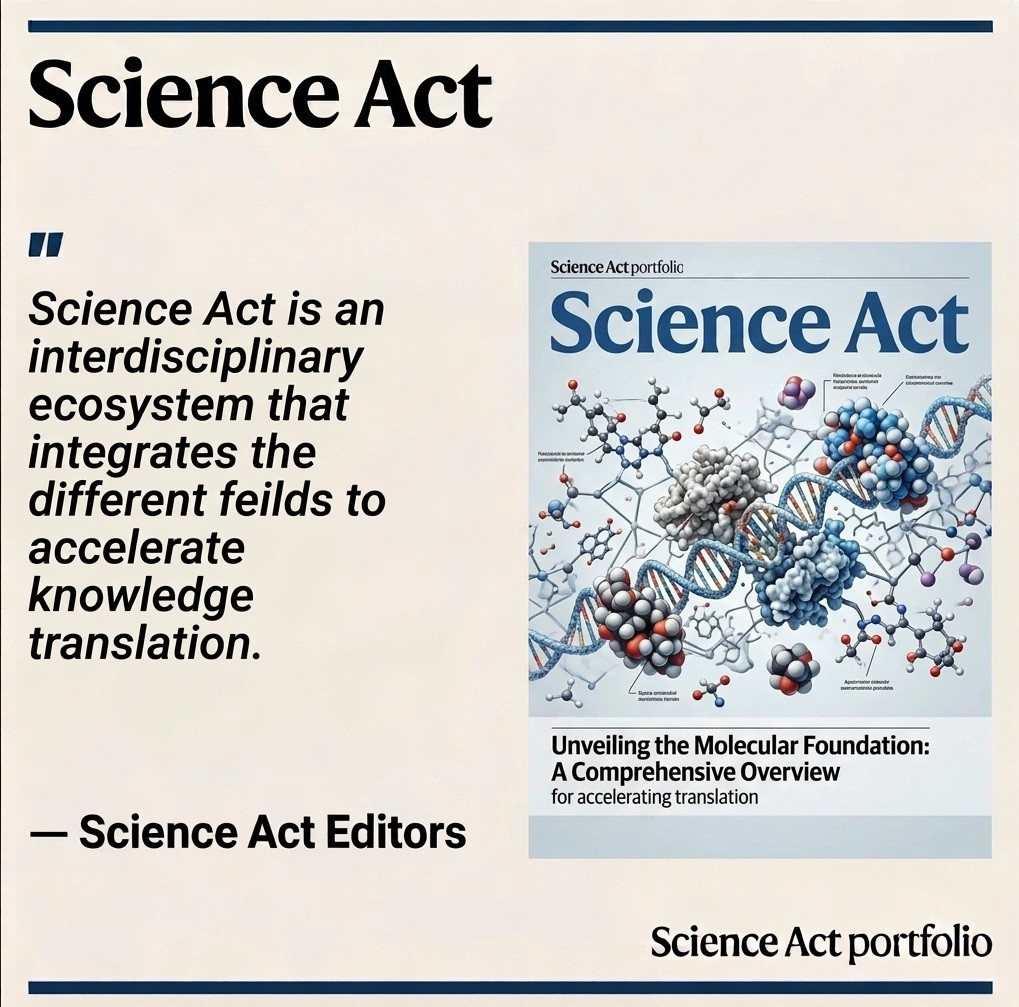
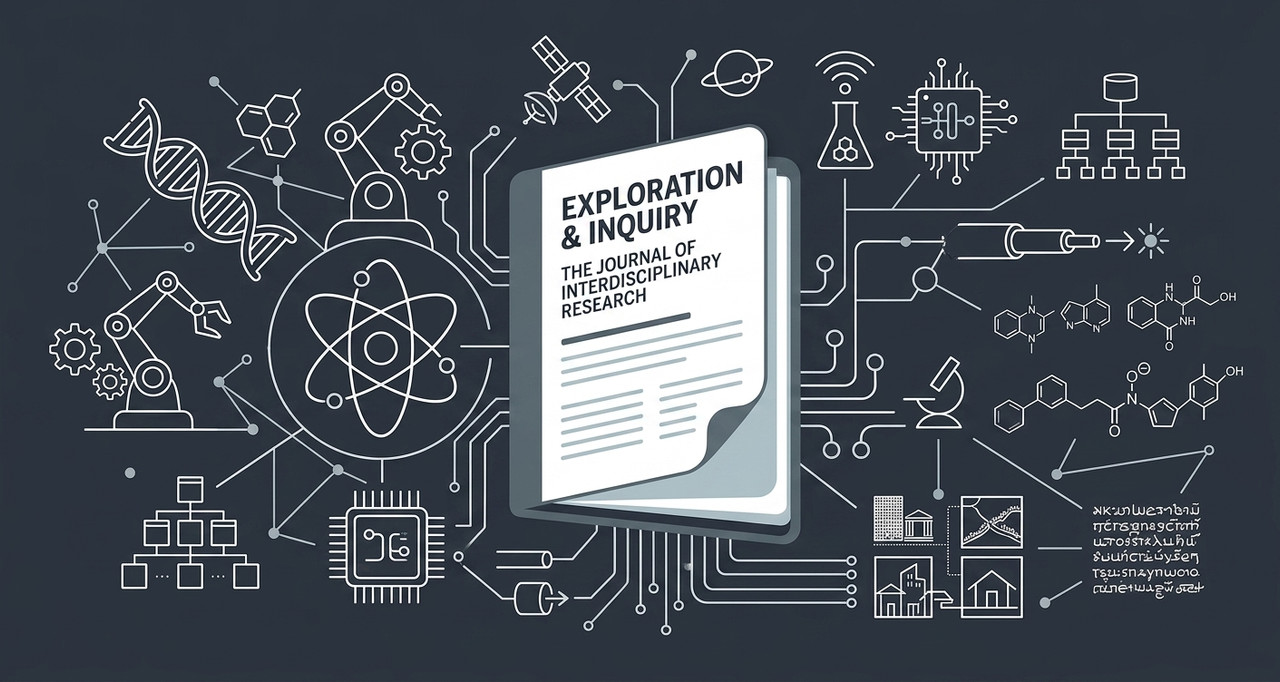
Science Act is a multidisciplinary journal that focuses on advancing scientific knowledge across various fields. It publishes original research, reviews, and articles that explore diverse areas of science, including biology, chemistry, physics, engineering, and environmental sciences. The journal employs a rigorous peer-review process, ensuring the quality and credibility of the content it publishes. This process fosters the validation of research findings and encourages scholarly dialogue. By bridging the gap between different scientific disciplines, Science Act serves as a platform for collaboration, innovation, and the dissemination of groundbreaking discoveries that address global challenges.
ISSN: 3115-7262
Advancing scientific knowledge through rigorous research, interdisciplinary thinking, and evidence-based discovery.