Global View
.jpg)

T he history of Iranian civilization contains a long and complex record of scientific and scholarly activity. Its institutions, intellectual languages and scientific methods changed substantially across centuries, but the preservation, transmission and development of knowledge remained central to many periods of Iranian history.
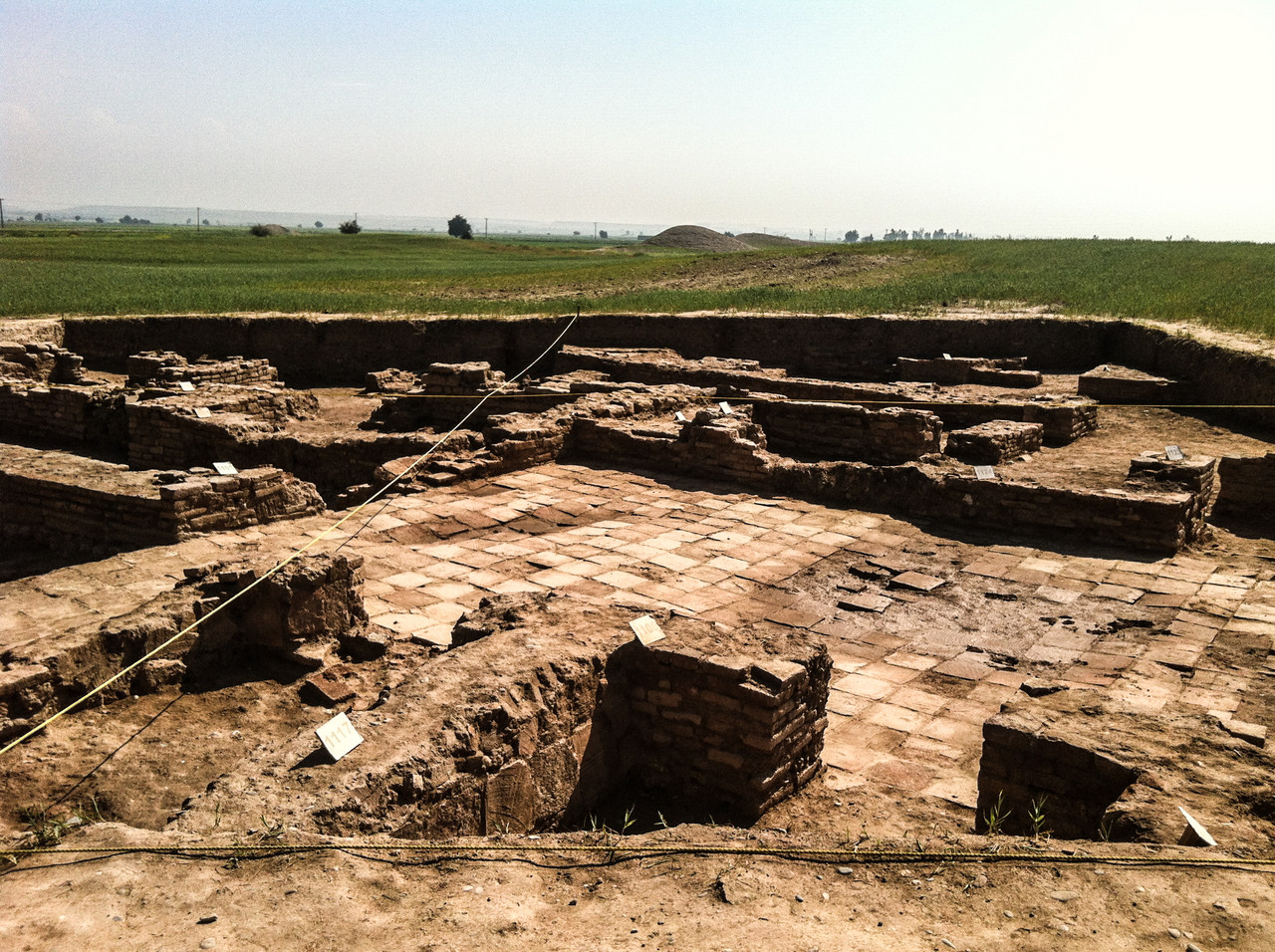
One of the most important early examples is Gondishapur, also known as Jundishapur, a major intellectual centre associated with the Sasanian Empire. Particularly during the later Sasanian period, the city became associated with medical education, scholarship, translation and the interaction of Greek, Syriac, Persian and Indian intellectual traditions.
Gondishapur should not be described as a modern university in exactly the institutional sense of a contemporary research university. Nevertheless, its historical significance lies in the concentration of physicians and scholars and in the circulation of scientific and medical knowledge across cultural boundaries.
The Sasanian intellectual environment associated with Gondishapur illustrates a principle that remains fundamental to modern science: progress is accelerated when knowledge from different intellectual traditions is brought together, translated, examined and developed.
This culture of intellectual transmission became particularly influential during the subsequent Islamic Golden Age, when scholars working across the Persianate intellectual world participated in a vast movement of translation, mathematical development, astronomical observation, medical scholarship and philosophical inquiry.
Between the eighth and twelfth centuries, scientific activity expanded through interconnected scholarly centres stretching across the Middle East, Central Asia and the wider Islamic world. Persian-speaking and Iranian scholars played major roles in this intellectual environment.
Muhammad ibn Musa al-Khwarizmi made foundational contributions to algebra and mathematical computation. Abu Rayhan al-Biruni made major contributions to astronomy, geodesy, chronology and comparative scholarship. Ibn Sina developed influential systems of medical and philosophical thought, while Omar Khayyam contributed significantly to mathematics and astronomy.
These developments demonstrate that scientific history cannot be reduced to a sequence of isolated discoveries. Scientific knowledge develops through networks of teachers and students, manuscripts and observatories, hospitals and libraries, instruments and mathematical methods.
The modern scientific institution emerged much later through universities, laboratories, academies, professional societies and international publication systems. Iran's modern scientific infrastructure developed through this global transformation, particularly during the nineteenth and twentieth centuries.
The development of modern universities and research institutions created new environments for experimental science, engineering, medicine and technological development. Iranian scientists increasingly participated in international research networks while contributing to national scientific institutions.
Science Act does not claim institutional descent from Gondishapur or from any single historical academy. Instead, its historical perspective is intellectual: contemporary scientific communication participates in a much older human effort to understand nature, preserve knowledge and communicate evidence.
The modern scientific enterprise is fundamentally international. Discoveries are evaluated through evidence, reproduced by independent researchers and communicated across geographical, linguistic and disciplinary boundaries.
For Science Act, this history provides both context and responsibility. The objective is not to romanticize the past, but to recognize that every generation inherits a body of knowledge and is responsible for testing, refining and extending it.
From ancient centres of learning to modern laboratories, scientific progress is ultimately sustained by curiosity, methodological rigor and the open exchange of ideas.
All accepted articles are eligible for full publication funding under the Science Act Flagship Journal Program. Funding support is guaranteed for manuscripts published before 2027, ensuring that authors face no article processing charges and can benefit from broad dissemination of their work. This initiative reflects our commitment to supporting high-quality scientific research and fostering global accessibility to new knowledge. For more information please check Funding programs.
Cookies are used by this site.
“Authors retain copyright of their work and grant Journal Science Act a non-exclusive license to publish the article under the CC BY 4.0 agreement.”
Attribution 4.0 International (CC BY 4.0) Deed: https://creativecommons.org/licenses/by/4.0
Science Act is a multidisciplinary journal that focuses on advancing scientific knowledge across various fields. It publishes original research, reviews, and articles that explore diverse areas of science, including biology, chemistry, physics, engineering, and environmental sciences. The journal employs a rigorous peer-review process, ensuring the quality and credibility of the content it publishes. This process fosters the validation of research findings and encourages scholarly dialogue. By bridging the gap between different scientific disciplines, Science Act serves as a platform for collaboration, innovation, and the dissemination of groundbreaking discoveries that address global challenges.
ISSN: 3115-7262
Advancing scientific knowledge through rigorous research, interdisciplinary thinking, and evidence-based discovery.